All published articles of this journal are available on ScienceDirect.

Integrated In-Silico Prioritization of Anti-Diabetic Candidates from Helianthus Tuberosus Using Bibliometrics, Target Prediction, Docking, MD, and ADMET Profiling
 , #
iD
Nuriddin Muhiddin Davlatali1 , #
iD
Jabor Yusufi Salomiddin1
Shahriyor Bakhtiyor Sharifzoda1
iD
Khushronsho Abdukarimzoda1
iD
Afshin Zare2
iD
Nadiar M. Mussin3
iD
Amin Tamadon4
iD
, #
iD
Nuriddin Muhiddin Davlatali1 , #
iD
Jabor Yusufi Salomiddin1
Shahriyor Bakhtiyor Sharifzoda1
iD
Khushronsho Abdukarimzoda1
iD
Afshin Zare2
iD
Nadiar M. Mussin3
iD
Amin Tamadon4
iD
Authors Info & Affiliations
Abstract
Introduction/Objective
Diabetes mellitus (DM) is a growing global burden associated with cardiovascular, neurological, and metabolic complications. Helianthus tuberosus (Jerusalem artichoke) contains inulin and bioactive phytochemicals that may modulate DM-related pathways. This study aimed to identify and prioritize candidate antidiabetic compounds through an integrated computational pipeline.
Methods
Bibliometric analysis of Web of Science and Scopus records retrieved in February 2025 mapped research trends and prioritized candidate molecules. Protein targets were predicted using SwissTargetPrediction. Lead compounds underwent molecular docking with AutoDock Vina, 10-ns molecular dynamics simulations in GROMACS, pharmacokinetic and drug-likeness assessment using SwissADME, and toxicity prediction using ProTox-3 and Way2Drug.
Results
“Fermentation,” “inulin,” and “metabolism” were the most frequent keywords. Six microbiome-derived metabolites generated through inulin fermentation and five plant phytochemicals were compiled. HDAC3, carbonic anhydrases, PTP1B, and EGLN1 emerged as relevant targets. Butyrate-HDAC3 and ferulic acid-CA XII formed stable complexes during molecular dynamics simulations (average RMSD ≤0.3 nm). Both compounds had SwissADME bioavailability scores of 0.85, although ferulic acid showed suboptimal solubility. ProTox-3 classified butyrate as Toxicity Class 3 (predicted LD50 approximately 91 mg/kg), with possible blood-brain barrier liability; Way2Drug indicated potential multisystem adverse effects at higher exposures.
Discussion
These findings suggest complementary antidiabetic mechanisms involving microbiome-derived metabolites and plant phytochemicals, but the computational predictions require experimental confirmation.
Conclusion
Butyrate and ferulic acid were prioritised for mechanism-focused preclinical validation, with attention to butyrate toxicity and ferulic acid formulation.
1. INTRODUCTION
Diabetes mellitus (DM) has been considered a primary global health-related concern, and its prevalence is increasing [1]. Moreover, DM can adversely affect the human body and lead to various serious side effects, including coronary heart disease, diabetic kidney disease, retinopathy, pre-diabetic neuropathy, and an increased risk of multiple infections [2]. Thus, scientists have explored various methods to treat DM [3].
One of the valuable resources for finding therapeutic agents for treating various diseases and improving human health is natural resources [4, 5]. Thus, natural products can be appropriate candidates for treating DM [6]. Diabetic drugs like insulin sensitizers, insulin secretagogues, and alpha-glucosidase inhibitors are examples of the use of various natural products to manufacture different anti-diabetic drugs [7]. As an essential member of natural resources, plants can produce many natural products with different therapeutic features, like anti-diabetic characteristics [8]. Helianthus tuberosus (H. tuberosus) is a plant that previous studies have proved to have various applications for treating DM, both in vitro [9] and in vivo [10]. Previous studies have also demonstrated that compounds derived from H. tuberosus can alleviate DM. For example, an ethanolic extract of a pancake-mixture powder supplemented with H. tuberosus demonstrated antidiabetic and anti-inflammatory activity [11]. Another study, in which different effects of H. tuberosus on blood glucose were assessed, demonstrated that ingesting H. tuberosus at breakfast rather than at dinner is more effective in suppressing glucose levels in the human body [12]. These studies demonstrated the anti-diabetic potential of H. tuberosus and its derivatives.
Therefore, this review aims to identify various anti-diabetic compounds derived from H. tuberosus. Moreover, this study involves drug design and discovery analysis to elucidate the best possible compound originating from H. tuberosus for the manufacture of future anti-diabetic drugs. Additionally, the present study aims to explain the anti-diabetic pathways through which H. tuberosus exerts its anti-diabetic effects. Finally, this review provides valuable insights for scientists to conduct more scientific work on H. tuberosus and its derivatives, offering researchers a paradigm for developing new antidiabetic agents in the near future.
2. METHODS
Figure 1 demonstrates the drug design and discovery steps performed in the present study. Detailed information about these steps follows:
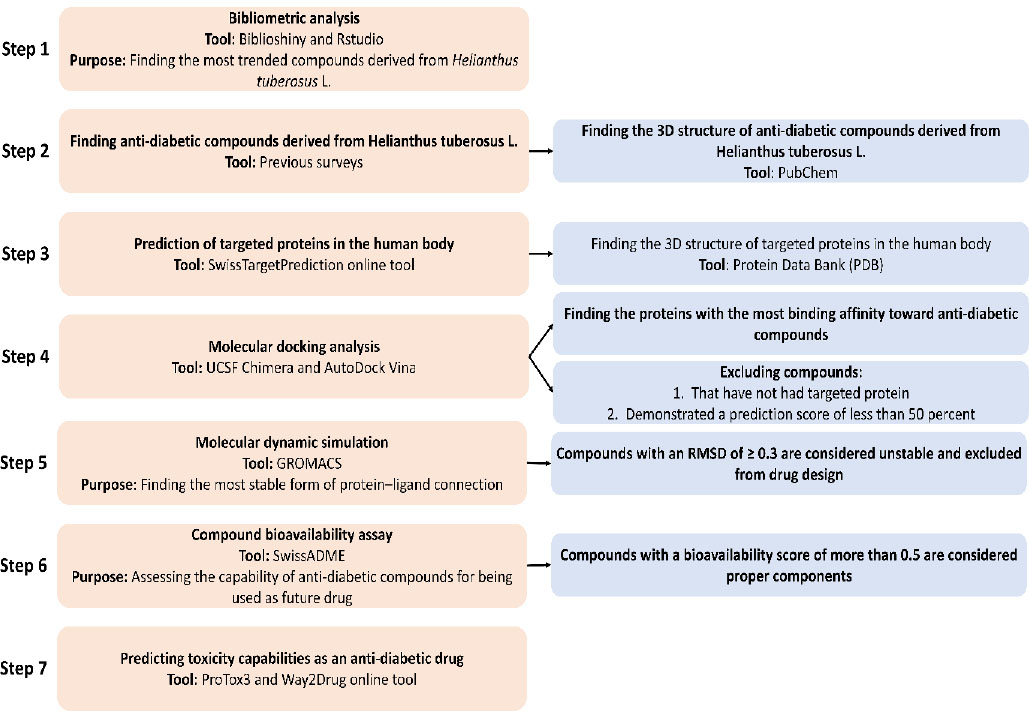
The schematic chart of the different steps of data-driven discovery of anti-diabetic compounds derived from Helianthus tuberosus that have been performed in this study.
2.1. Data Collection and Processing
This study conducted a comprehensive bibliometric analysis to evaluate the medicinal potential of H. tuberosus by identifying the most frequently used keywords in studies that have assessed H. tuberosus. Data were systematically retrieved from the Web of Science and Scopus databases in February 2025. The search strategy, presented in Fig. (1), involved querying article titles, abstracts, and keywords using a combination of Boolean operators and wildcard symbols to capture relevant literature, as outlined in Table S1. No restrictions were placed on the publication year, ensuring a comprehensive dataset. To maintain consistency, only articles published in English were included in the analysis. The metadata from both databases were exported in BibTeX and plain text formats, respectively. These datasets were then imported into RStudio (version 2024.12.1 Build 563) for integration and analysis. After removing duplicates and normalizing the metadata, a refined dataset of 1,049 unique documents was obtained from the initial pool of publications (Table S1).
2.2. Finding the Antidiabetic Compounds Resulting from Fermentation and Reported in different Parts of H. tuberosus
Anti-diabetic candidates were collected in two categories: (i) fermentation-derived metabolites produced by gut microbial metabolism of inulin (short-chain fatty acids and organic acids), and (ii) phytochemicals reported in H. tuberosus with documented anti-diabetic or glucose-modulating effects [13, 14]. Compounds were compiled from published reviews and experimental studies and prioritized based on bibliometric frequency and reported biological relevance.
The resulting set was a predefined literature-based screening library rather than an exhaustive catalogue of all phytochemicals reported in H. tuberosus. Compounds were retained when the cited literature reported their occurrence or formation in relation to H. tuberosus or inulin fermentation and provided evidence of antidiabetic or glucose-modulating relevance. All considered compounds and the reasons for progression or exclusion are reported in Table S2.
2.3. Predicting the Targeted Proteins of Anti-Diabetic Compounds derived from H. tuberosus
We chose the SwissTargetPrediction online tool, a knowledge-based approach to predict new targets of an uncharacterized molecule or secondary targets for a known molecule [15], to predict the best possible protein targets of phytochemicals reported in different parts of H. tuberosus with antidiabetic characteristics. In SwissTargetPrediction, predictions are made based on similarity to known ligands of target proteins, and the scoring system is designed to rank the likelihood of a compound binding to a specific target [16]. While the tool does not always provide a strict cutoff value, we considered a prediction probabilty ≥ 0.5 for reasonable confidence in predictions based on previous surveys [17]. Target prediction was restricted to Homo sapiens. The top-ranked predicted targets were retained, and proteins with a prediction probability ≥0.5 were considered for downstream analysis, consistent with prior computational pharmacology studies.
2.4. Preparing Ligands and Predicted Targeted Proteins for Molecular Docking Analysis
The 3D structures of anti-diabetic compounds derived from both fermentation and other parts of H. tuberosus and the predicted targeted proteins were obtained from PubChem (National Center for Biotechnology Information (NCBI, 2025). PubChem Compound Summary for anti-diabetic compounds derived from fermentation and other parts of H. tuberosus), PubChem, and the Protein Data Bank (PDB) [18] online databases, respectively. The UniProt online database [19] was chosen to obtain the 3D structures of proteins whose 3D structures are not mentioned in the PDB.
2.5. Molecular Docking Analysis
Molecular docking analysis was performed between anti-diabetic compounds derived from fermentation and other parts of H. tuberosus and predicted targeted proteins using UCSF Chimera [20] and AutoDock Vina [21]. The highest binding affinity (Kcal/mole) was considered the most appropriate conformation of the interaction between the ligand and protein. The ligands and targeted proteins with the highest binding affinity were selected for molecular dynamics simulations. Protein structures were prepared by removing water molecules and heteroatoms, adding polar hydrogens, and assigning partial charges. Docking grids were centered on the active sites of each protein, and AutoDock Vina was run using default exhaustiveness. The pose with the lowest binding free energy and biologically plausible interactions was selected for MD simulation.
2.6. Molecular Dynamics Simulation
Molecular dynamics simulations for the ligand-protein conformations with the highest binding affinity were performed using GROMACS [21] in the Linux environment with the help of UCSF Chimera. The duration of the molecular dynamics simulation was 10 nanoseconds (ns), and it was performed in a molecular dynamics run of 5,000,000 steps. Conformations with an RMSD value of less than 0.2 nm are generally considered acceptable for a high-quality model for molecular simulations and docking applications. RMSD values were calculated for ligand heavy atoms relative to the initial docked conformation.
2.7. The Bioavailability Assay
The bioavailability assay [22] of anti-diabetic compounds derived from both fermentation and other parts of H. tuberosus, with the most stable ligand-protein interactions with the predicted targeted protein, was assessed using the SwissADME online tool [23]. Based on the principles of the SwissADME online tool, various criteria were evaluated for assessing the bioavailability of components derived from H. tuberosus [23]. Ultimately, compounds with a bioavailability score of 0.5 or greater were considered suitable components for the drug prediction assay.
2.8. Drug Prediction Assay
The anti-diabetic compounds derived from both fermentation and other parts of H. tuberosus, with the most stable ligand-protein connection and the predicted targeted protein, and a proper bioavailability score, underwent evaluation using two online tools: ProTox 3 [24] and Way2Drug [25]. ProTox3 demonstrated the detailed molecular features, LD50, toxicity class, and cellular pathways that can be affected by the toxicity of this compound, which could be utilized as a future anti-diabetic drug. Toxic doses are often given as LD50 values in mg/kg body weight. The LD50 is the median lethal dose, meaning the dose at which 50% of test subjects die upon exposure to a compound. Toxicity classes are defined according to the Globally Harmonized System of Classification and Labeling of Chemicals (GHS). LD50 values are given in (mg/kg) [24]:
Class I: fatal if swallowed (LD50 ≤ 5)
Class II: fatal if swallowed (5 < LD50 ≤ 50)
Class III: toxic if swallowed (50 < LD50 ≤ 300)
Class IV: harmful if swallowed (300 < LD50 ≤ 2000)
Class V: may be harmful if swallowed (2000 < LD50 ≤ 5000)
Class VI: non-toxic (LD50 > 5000)
Moreover, Way2Drug demonstrated which molecular or cellular pathways will be affected in case of toxicity with the mentioned compounds as an anti-diabetic drug [25].
2.9. Data Visualization
Discovery Studio Visualizer software was used to present molecular docking results in 3D. The results of the RMSD condition of ligands were demonstrated using Grace software (Grace Software, version 5.1.22, Batwing, B. (Developer), 2021. Available at: http://plasma-gate. weizmann.ac.il/Grace/). Moreover, Cytoscape software [26] was used to depict the molecular pathways by which compounds derived from H. tuberosus exert their anti-diabetic roles.
3. RESULTS
3.1. The Results of Keyword Analysis from the Bibliometric Analysis
Figure 2 presents the frequency of key terms used in scientific publications related to the medicinal potential of H. tuberosus. The most commonly mentioned terms include: “Jerusalem artichoke” (271 occurrences), “Helianthus tuberosus” (220), “article” (191), “Helianthus” (142), “fermentation” (133), “nonhuman” (129), “inulin” (118), “sunflower” (114), “metabolism” (102), and “controlled study” (88). Among the keywords mentioned, Jerusalem artichoke (Helianthus tuberosus), Helianthus, nonhuman, sunflower, and controlled study are general keywords that do not focus on a specific scientific field. However, the three keywords of fermentation, inulin, and metabolism highlight the focus of scientists on evaluating various medical applications of H. tuberosus.
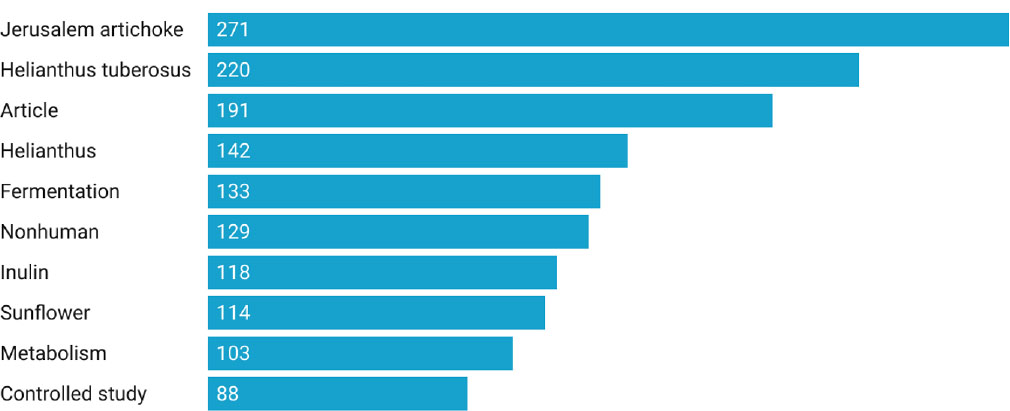
The trends in using these keywords over time in scientific research focused on the medicinal properties of Helianthus tuberosus.
3.2. Compounds Resulting from Fermentation and Reported in different Parts of H. tuberosus
Acetate, Butyrate, Ethyl acetate, Lactate, Propionate, and Succinate were compounds derived from the fermentation of inulin in the gastrointestinal (GI) tract. Besides, Faradiol, 5-Feruloylquinic acid, Ferulic acid, Sulferein glycoside, and Vanillin are phytochemicals in the structure of H. tuberosus with anti-diabetic features. Tables 1 and S2 demonstrate detailed information about these molecules.
| Compound Name | PubChem ID | Molecular Formula | Molecular Weight |
|---|---|---|---|
| Compounds that are derived from the fermentation of H. tuberosus | |||
| Acetate | 175 | C2H3O2- | 59.04 g/mol |
| Butyrate | 104775 | C4H7O2- | 87.10 g/mol |
| Ethyl acetate | 8857 | C4H8O2 | 88.11 g/mol |
| Lactate | 91435 | C3H5O3- | 89.07 g/mol |
| Propionate | 104745 | C3H5O2- | 73.07 g/mol |
| Succinate | 160419 | C4H4O4-2 | 116.07 g/mol |
| Phytochemicals reported in different parts of H. tuberosus | |||
| Faradiol | 9846222 | C30H50O2 | 442.7 g/mol |
| 5-Feruloylquinic acid | 10133609 | C17H20O9 | 368.3 g/mol |
| Ferulic acid | 445858 | C10H10O4 | 194.18 g/mol |
| Sulferein glycoside | 10071442 | C21H20O10 | 432.4 g/mol |
| Vanillin | 1183 | C8H8O3 | 152.15 g/mol |
3.3. Prediction of the Best Possible Targeted Proteins that Phytochemicals and Compounds Reported in different Parts of H. tuberosus, with Antidiabetic Characteristics, can Target
Figure S1 displays different proteins that can be targeted by phytochemicals and compounds reported in other parts of H. tuberosus and the 2D structures of the mentioned compounds derived from this plant. Based on the information in Fig. (S1), butyrate, ferulic acid, faradiol, and succinate can target proteins in humans with an acceptable probability.
Additionally, Table 2 highlights the proteins that can be targeted by phytochemicals and compounds reported in various parts of H. tuberosus with antidiabetic properties in the human body. Moreover, Table 2 illustrates the diverse roles of these proteins and the molecular pathways through which they can impact diabetes. PTP1B is a negative regulator of insulin receptor signaling, and its inhibition improves insulin sensitivity. HDAC3 is implicated in metabolic inflammation and endothelial dysfunction in diabetes. Carbonic anhydrase isoforms, including CA XII, are involved in metabolic and vascular regulation in diabetic conditions. EGLN1 (PHD2) regulates hypoxia-inducible signaling, which is relevant to angiogenesis and wound healing in diabetes.
| The Name of the Protein | Role of the Protein in Diabetes | Molecular Mechanism of the Protein in Diabetes | PDB/UniProt ID | Reference | |
|---|---|---|---|---|---|
| Amelioration | Deterioration | ||||
| Butyrate | |||||
| HDAC3 | + | Increasing the interaction between Keap1 and Nrf2. | 4A69 | [36] | |
| Inhibiting the nuclear translocation and activation of Nrf2 | |||||
| Downregulation of the expression of antioxidant genes, such as NQO1, SOD2, and HO1 | |||||
| Inducing oxidative stress and inflammation | |||||
| Upregulation of pro-inflammatory markers prevents eNOS uncoupling | |||||
| Inducing endothelial dysfunction | |||||
| Faradiol | |||||
| Protein-tyrosine phosphatase 1B | + | Negative regulator of insulin signaling | 1AAX | [33] | |
| Dephosphorylation of the IR | |||||
| Impairing the IR signaling cascade | |||||
| Inducing insulin resistance | |||||
| Ferulic acid | |||||
| Carbonic anhydrase I | + | Participates in vasoconstriction and vasodilation | 1HCB | [40] | |
| Carbonic anhydrase II | Participates in secretory processes and may | 2F14 | |||
| influence the progression of vascular and myocardial complications | |||||
| Serving as a potential marker for the extent of myocardial damage in diabetics. | |||||
| Carbonic anhydrase VA | 1. Contributing to vascular complications in diabetes 2. Regulation of vascular endothelial function, 3. Increasing oxidative stress and vascular calcification 4. Catalyzing the reversible hydration of CO2 to bicarbonate and protons, 5. Regulating the pH balance in tissues and modulating vascular calcification. |
P35218 · CAH5A_HUMAN | |||
| Carbonic anhydrase VI | 3FE4 | ||||
| Carbonic anhydrase VII | 3MDZ | ||||
| Carbonic anhydrase XII | 7PP9 | ||||
| Carbonic anhydrase IX | 7POM | ||||
| Carbonic anhydrase XIV | 4LU3 | ||||
| Succinate | |||||
| Egl nine homolog 1 | + | 1. Regulating the HIF pathway | 6YW2 | [41] | |
| Suppressing pro-angiogenic signaling | |||||
| Suppressing VEGF | |||||
| Downregulating the levels of HIF1α | |||||
| Suppressing fibroblast proliferation | |||||
| Suppressing capillary formation | |||||
| Suppressing wound healing in diabetic conditions | |||||
Note: HDAC3, Histone Deacetylase 3; Keap1, Kelch-like ECH-associated protein 1; Nrf2, Nuclear factor erythroid 2-related factor 2; NQO1, NAD(P)H Quinone Dehydrogenase 1; SOD2, Superoxide Dismutase 2; HO1, Heme Oxygenase 1; eNOS, endothelial Nitric Oxide Synthase; IR, Insulin Receptor; CA I, Carbonic Anhydrase I; CA II, Carbonic Anhydrase II; PHD2, Prolyl Hydroxylase Domain-containing Protein 2; HIF, Hypoxia-Inducible Factor; HIF1α, Hypoxia-Inducible Factor 1-alpha; VEGF, Vascular Endothelial Growth Factor.
3.4. Molecular Docking Analysis
Molecular docking analysis demonstrated that butyrate, ferulic acid, faradiol, and succinate could target proteins in the human body in an in-silico environment (Fig. 3). Moreover, Fig. (3) displays detailed information on the molecular interactions among butyrate, ferulic acid, faradiol, and succinate, as well as the potential target proteins in the human body.
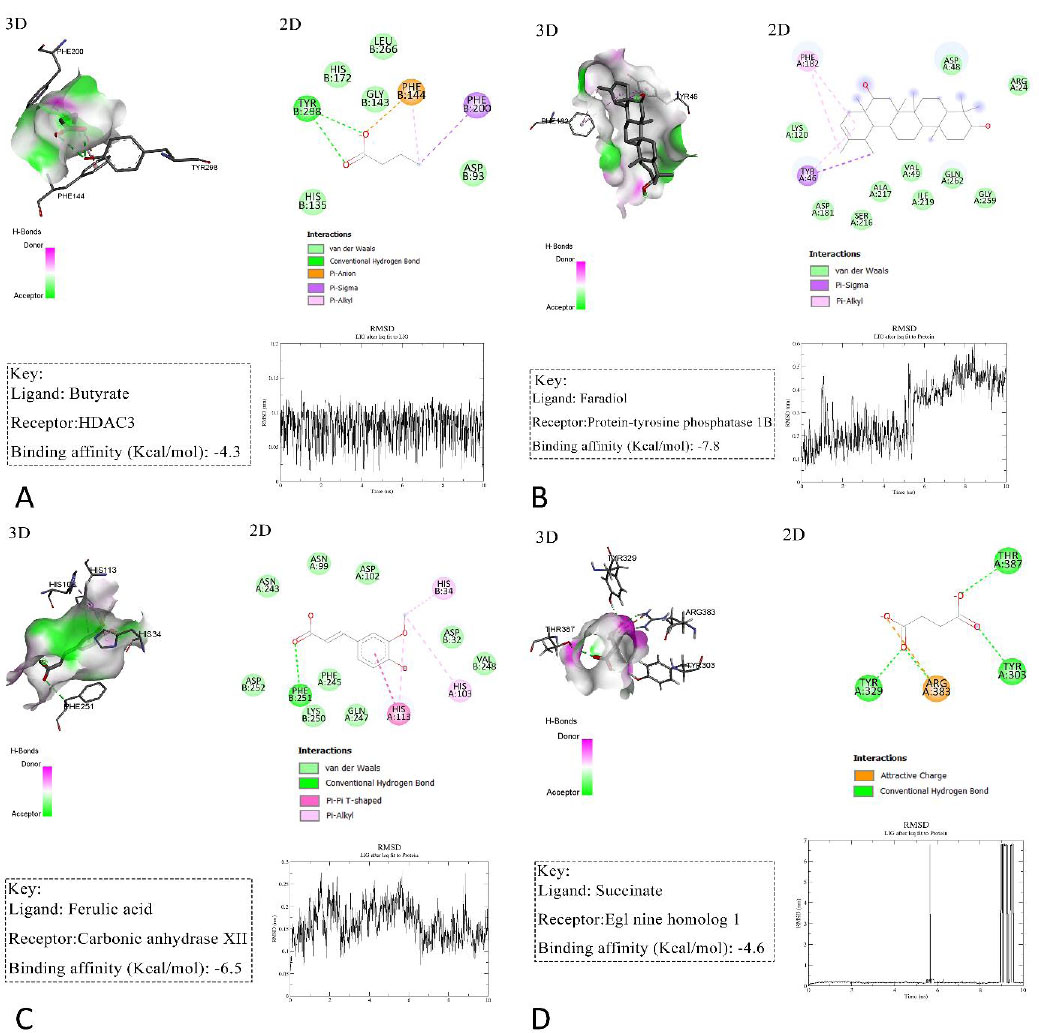
2D and 3D demonstration of molecular interactions between anti-diabetic compounds derived from Helianthus tuberosus and the possible targeted proteins in the human body. The key in the Figure displays the names of the ligand and protein participating in the molecular interaction. The RMSD chart of the ligand in the targeted protein is also depicted in the lower right section of the Figure.
3.5. The Results of the Molecular Dynamics Simulation
Based on our findings from the molecular dynamics simulation, Butyrate and Ferulic acid, with average RMSD values of less than 0.5 nm, displayed stable interactions with HDAC3 and Carbonic anhydrase XII, respectively. Thus, these two compounds underwent a bioavailability assay (Table 3).
| Ligand | Targeted Protein | Minimum RMSD | Maximum RMSD | Average RMSD |
|---|---|---|---|---|
| Butyrate | HDAC3 | 0.00 | 0.13 | 0.07 |
| Faradiol | Protein-tyrosine phosphatase 1B | 0.00 | 0.6 | 0.3 |
| Ferulic acid | Carbonic anhydrase XII | 0.00 | 0.28 | 0.16 |
| Succinate | Egl nine homolog 1 | 0.00 | 6.87 | 0.44 |
3.6. The Results of the Bioavailability Assay
Based on data from the SwissADME online tool, the bioavailability scores for Butyrate and Ferulic acid are acceptable at 0.85. In addition, Figure 4 displays the Bioavailability Radar for Butyrate and Ferulic Acid, which highlights the key molecular features of these two compounds as therapeutic agents in the human body. Contrary to Butyrate, different features of Ferulic acid are not entirely located in the pink area.
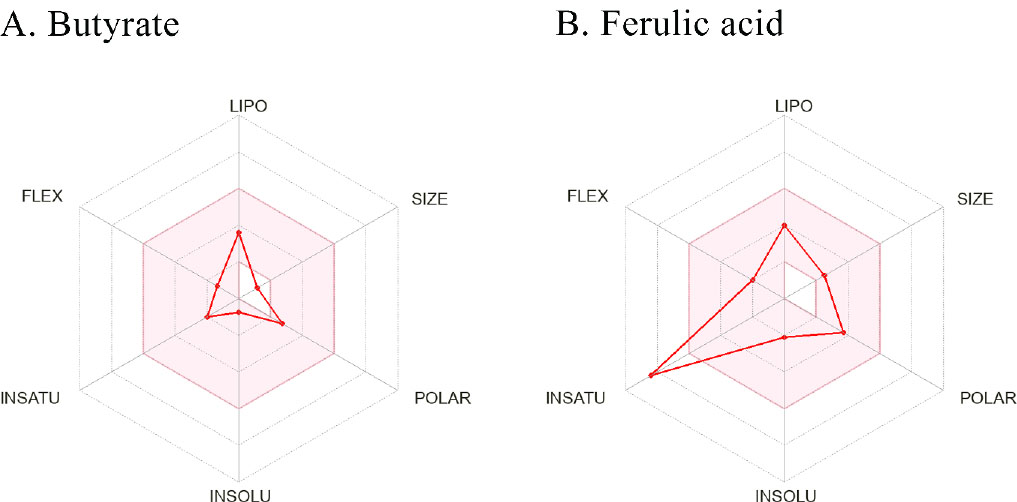
The Bioavailability Radar of Butyrate and Ferulic Acid. The pink area represents the optimal range for each property (lipophilicity (LIPO): XLOGP3 between −0.7 and +5.0, size: MW between 150 and 500 g/mol, polarity (POLAR): TPSA between 20 and 130 Å2, solubility (INSOLU): log S not higher than 6, saturation (INSATU): fraction of carbons in the sp3 hybridization not less than 0.25, and flexibility (FLEX): no more than nine rotatable bonds [38].
3.7. Results of the ProTox3 and Way2Drug Analysis
Based on the analysis of ProTox3, butyrate is categorized as Toxicity Class 3 as an anti-diabetic drug, with an LD50 of 91 mg/kg (Fig. 5). Figure 5 also depicts ProTox3's prediction accuracy. Besides, the analysis using the ProTox3 online tool has also shown that the toxicity of butyrate as an oral anti-diabetic drug can adversely affect the blood-brain barrier (BBB) (Fig. 5). Moreover, in detail, the Way2Drug online tool demonstrated the different side effects of butyrate as an oral anti-diabetic drug (Table S3).
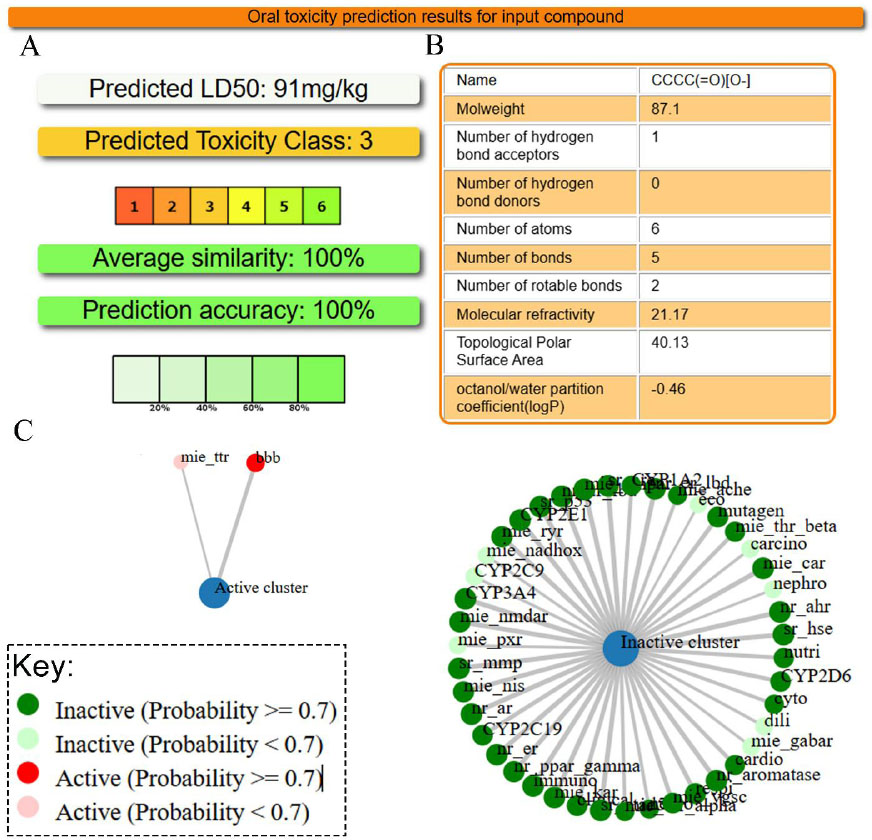
ProTox 3.0 predictions for butyrate. (A) Predicted acute oral LD50 and toxicity class; (B) calculated molecular descriptors; and (C) predicted toxicity-related molecular endpoints. The outputs are computational predictions and do not constitute experimentally confirmed toxicity. BBB, blood–brain barrier; TTR, transthyretin. Source: Reconstructed by the authors from ProTox 3.0 outputs.
3.8. Various Steps of the Present Drug Design and Drug Discovery
Based on the steps outlined in the present review, Table 4 lists the consecutive steps involved in drug design and discovery.
| Compounds | SwissTargetPrediction | Molecular Docking | MD Simulation | SwissADME | ProTox3 | Way2Drug |
|---|---|---|---|---|---|---|
| Acetate | + | |||||
| Butyrate | + | + | + | + | + | + |
| Ethyl acetate | + | |||||
| Lactate | + | |||||
| Propionate | + | |||||
| Succinate | + | + | + | |||
| Faradiol | + | + | + | |||
| 5-Feruloylquinic acid | + | |||||
| Ferulic acid | + | + | + | + | ||
| Sulferein glycoside | + | |||||
| Vanillin | + |
4. DISCUSSION
Based on our bibliometric analysis, three keywords, fermentation, inulin, and metabolism, were the most trending keywords in studies where H. tuberosus was evaluated (Fig. 1). Inulin has been considered one of the natural products of H. tuberosus, which possesses different biological functions such as antioxidant and anti-inflammatory activity [27]. Moreover, inulin cannot be digested by the enzymes of the GI tract in the human body, and its digestion in the GI tract of humans is performed by normal flora that exists in the mentioned tract by fermentation. This fermentation produces some compounds, including acetate, butyrate, ethyl acetate, lactate, propionate, and succinate [14]. Notably, previous studies have demonstrated that inulin and its fermented derivative metabolites can ameliorate both type 1 [28] and type 2 [29] DM, as well as various side effects of DM, like diabetic nephropathy [30].
Besides, the ameliorative effects of H. tuberosus on different kinds of metabolic disorders, especially diabetes mellitus, are another considerable therapeutic feature of this plant [13]. Based on this information, the results of our bibliometric analysis are compatible with the findings of previous studies and confirm that scientists' focus on the fermentation process of inulin as a natural product of H. tuberosus and its fermented derivative components, as well as other natural products of H. tuberosus, for managing metabolic disorders, including DM, has increased in recent years. Therefore, H. tuberosus and its derivatives are good candidates for the manufacture of new anti-diabetic agents.
Based on our results in Table 1, two categories of compounds have been considered beneficial antidiabetic components derived from H. tuberosus based on the bibliometric analysis. First, compounds derived from the fermentation of inulin contain acetate, butyrate, ethyl acetate, lactate, propionate, and succinate. Second, components derived from the other parts of the structure of H. tuberosus include faradiol, 5-feruloylquinic acid, ferulic acid, sulferein glycoside, and vanillin. Notably, these compounds have ameliorated DM [13, 31].
The results from SwissTargetPrediction show that among all the compounds derived from H. tuberosus with antidiabetic features (Table 1), four components, including butyrate, faradiol, ferulic acid, and succinate, can target different proteins in humans (Table 2). These targeted proteins include protein-tyrosine phosphatase 1B (PTP1B), the CA isoenzymes, and histone deacetylase 3 (HDAC3), which SwissTargetPrediction predicted that the anti-diabetic compounds originating from H. tuberosus can target with a prediction rate of above 50 percent (Fig. 1).
When inhibited, PTP1B ameliorates diabetes [32]. It is a negative regulator of the insulin receptor signalling pathway, and its inhibition improves insulin sensitivity and glucose tolerance. This makes PTP1B inhibition a potential therapeutic approach to treating type 2 DM (T2DM) and its complications [33].
Carbonic anhydrase isoenzymes play context- and isoform-dependent roles in diabetes, influencing vascular function, metabolic regulation, and tissue pH homeostasis. The manuscript discusses various roles of carbonic anhydrase, particularly in vascular calcification and the regulation of blood flow, which can affect diabetic conditions such as retinopathy and other vascular complications. The inhibition of carbonic anhydrase enzymes has been shown to potentially worsen complications like diabetic retinopathy and vascular calcification [34]. Carbonic anhydrase inhibitors (CAIs) hold promise for addressing various diseases, including cancer, diabetes, and other metabolic syndromes [35].
HDAC3 has an ameliorative effect on diabetes. Inhibiting HDAC3 in diabetic models has alleviated endothelial dysfunction and oxidative stress, which are significant contributors to diabetic vascular complications. Specifically, HDAC3 inhibition improved endothelial function by activating the Nrf2 pathway, which reduces inflammation and oxidative stress [36].
The results of molecular docking analyses in the present study reveal that butyrate, ferulic acid, faradiol, and succinate have in silico affinity toward the predicted targeted proteins in the human body (Fig. 3). However, according to the molecular dynamics simulation, among these four compounds, butyrate and ferulic acid can create a stable molecular interaction with their targeted proteins because their average RMSD is less than 0.3 nm (Table 3 and Fig. 3) [22]. Therefore, based on molecular docking analyses and molecular dynamics simulation information in Fig. (3), H. tuberosus exerts anti-diabetic functions through molecular pathways depicted in Fig. (6).
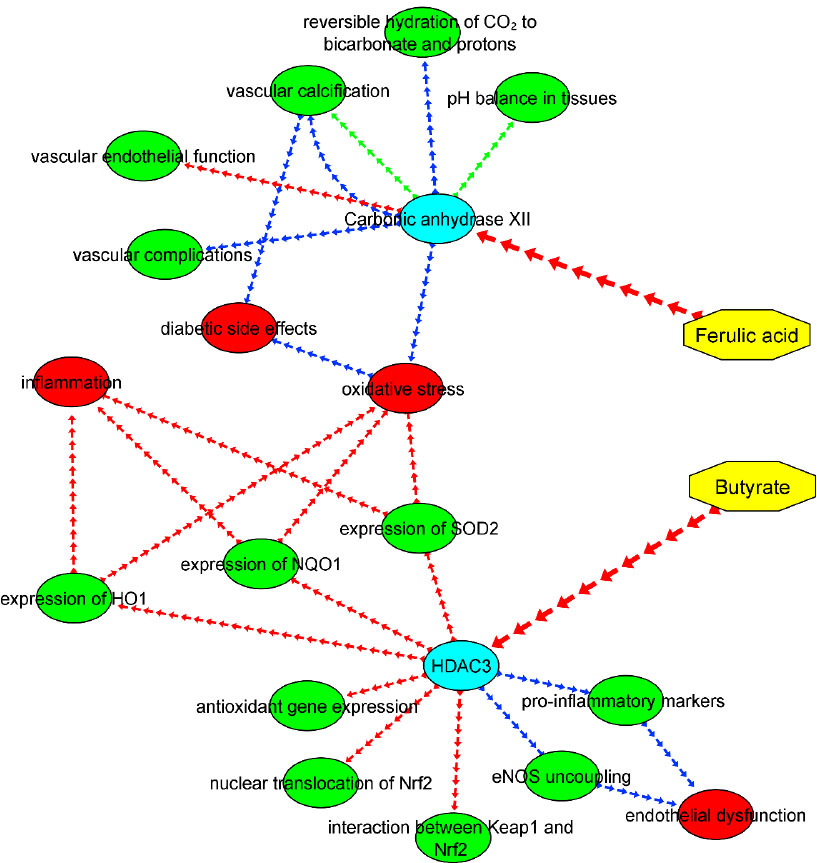
The molecular pathways by which Butyrate and Ferulic acid derived from Helianthus tuberosus exert their anti-diabetic functions. Red, blue, and green arrows represent inhibition/downregulation, activation/upregulation, and regulation, respectively. The yellow octagons demonstrate Butyrate and Ferulic acid. The light blue, green, and red ovals depict targeted proteins in the human body, moderator genes and molecules, and the final effect on diabetes, respectively. (Butyrate, Butyric acid; HDAC3, Histone Deacetylase 3; Keap1, Kelch-like ECH-associated protein 1; Nrf2, Nuclear factor erythroid 2-related factor 2; NQO1, NAD(P)H Quinone Dehydrogenase 1; SOD2, Superoxide Dismutase 2; HO1, Heme Oxygenase 1; eNOS, endothelial Nitric Oxide Synthase; Ferulic acid, 4-hydroxy-3-methoxycinnamic acid; Carbonic anhydrase XII, Carbonic Anhydrase XII; CO2, Carbon dioxide).
Based on the findings obtained from SwissADME, both butyrate and ferulic acid achieved an acceptable bioavailability score of 0.85, which makes them anti-diabetic compounds with excellent bioavailability [23]. Interestingly, previous studies have also considered compounds with a bioavailability score of more than 0.5 acceptable for assessing a component's bioavailability [37]. However, based on the information presented in Fig. (4), ferulic acid's drug-likeness is insufficient due to its high insolubility [23]. Thus, butyrate is considered an appropriate antidiabetic component derived from H. tuberosus, which can be utilized as a future anti-diabetic drug.
Based on the analysis of the SMILES format of butyrate by ProTox 3, this compound, as an oral anti-diabetic drug, will be categorized as Class 3 with an LD50 of 91 mg/kg (Fig. 5). Interestingly, butyrate has also been used as a drug in different therapeutic fields, including oral health [38] and the treatment of various metabolic disorders like hyperlipidemia [39].
Butyrate could potentially be used in drug manufacturing, but its moderate toxicity (LD50 of 91 mg/kg) requires careful attention to dose management and formulation strategies.
Moreover, the analysis of the SMILES format of butyrate by Way2Drug demonstrated that it presents a broad range of toxic effects across multiple organ systems, including the respiratory, metabolic, dermatological, neurological, and GI systems (Table S3). Specific concerns include severe cardiovascular and respiratory impairments, metabolic disturbances, dermatological reactions, and neurological symptoms. These findings underline the importance of carefully monitoring patients for adverse effects, particularly when administering butyrate in clinical settings. Further research is needed to explore the mechanisms of these toxicities and assess their clinical relevance.
4.1. Interpretation of Butyrate Toxicity Predictions
Although ProTox3 classified butyrate as Toxicity Class 3 at high predicted doses, butyrate is a naturally occurring short-chain fatty acid produced endogenously in the colon through microbial fermentation of dietary fiber. The predicted LD50 reflects the acute toxicity of an isolated, systemically available compound rather than physiological colonic exposure. In vivo, butyrate is largely metabolized locally by colonocytes, and systemic concentrations depend on dose, formulation, and route of administration. Therefore, the observed in silico toxicity highlights the importance of dose optimization and formulation strategies rather than excluding butyrate as a candidate.
4.2. Strengths and Limitations
This study has several notable strengths. First, it employed an end-to-end, data-driven pipeline that integrated bibliometric analysis, target prediction, molecular docking, short-timescale molecular dynamics (MD) simulations, pharmacokinetic and drug-likeness evaluation, and in silico toxicity profiling. This comprehensive workflow reduces reliance on any single method and improves the reliability of candidate selection. Second, by focusing on natural products from Helianthus tuberosus, the study highlights a widely available plant source with both nutraceutical and pharmaceutical potential, thereby enhancing translational feasibility. Third, the use of publicly available databases such as Web of Science, Scopus, PubChem, PDB, and UniProt, combined with open-access computational tools like SwissTargetPrediction, AutoDock Vina, GROMACS, SwissADME, ProTox3, and Way2Drug, strengthens methodological transparency and reproducibility. Another strength lies in the triangulation of results across docking scores, MD stability (RMSD), and ADME-toxicity filters, which converged on a small number of tractable lead compounds, namely butyrate and ferulic acid, thus reinforcing confidence in their therapeutic promise. Furthermore, by identifying multiple target proteins and pathways, including HDAC3, CA isoforms, and PTP1B, the study adopts a systems-level view that supports hypothesis generation for multi-target interventions in diabetes. Finally, the extensive use of visual outputs, such as molecular interaction diagrams, bioavailability radars, and pathway schematics, enhances the interpretability of results and facilitates their application in subsequent experimental design.
Despite its strengths, the study has several limitations. The initial compound selection was guided by bibliometric trends, which introduces a degree of selection bias and may exclude less-studied but potentially valuable molecules. The analysis was entirely in silico, meaning that the findings still require experimental confirmation in biochemical assays, cellular systems, and in vivo diabetic models to validate efficacy and safety. Computational approaches also have inherent constraints; for instance, docking was performed with a single engine, and MD simulations were limited to 10 nanoseconds, which restricts conformational sampling. Protein structures were derived from available PDB entries or modeled databases, which may not fully represent physiological states, cofactors, or active-site conditions. In terms of chemistry, the screened library included only a limited set of fermentation products and phytochemicals from H. tuberosus, without exhaustive exploration of stereoisomers, metabolites, or microbiome-derived derivatives. Predictive tools such as SwissADME, ProTox3, and Way2Drug also have limited applicability domains, and their results may not fully capture organ-specific toxicity, off-target effects, or clinical pharmacokinetics. Importantly, the broader biological context was not modeled, including membrane permeability, transporter activity, protein-protein interactions, and hormonal regulation of glucose metabolism. Moreover, the biological roles of HDAC3 and carbonic anhydrases are complex and context-dependent, meaning that therapeutic outcomes could vary across tissues and disease states. Finally, while butyrate emerged as a promising candidate, its predicted moderate toxicity, volatility, and potential blood-brain barrier liability highlight translational challenges that must be addressed through formulation strategies and careful dose optimization.
CONCLUSION
The present study demonstrated that the anti-diabetic effects of H. tuberosus have been evaluated in recent studies, highlighting the importance of utilizing natural products from this plant. Moreover, H. tuberosus, through its derivative compounds, can affect molecular mechanisms involved in the pathogenesis of DM. Besides, H. tuberosus has some effective anti-diabetic compounds that can be used as future drugs to treat DM, including butyrate. Ultimately, this study emphasizes the anti-diabetic potential of H. tuberosus and provides valuable insight to researchers for conducting more scientific work on this plant.
AUTHORS’ CONTRIBUTIONS
The authors confirm contribution to the paper as follows: R.S.S.: Conceptualization, investigation, writing - original draft, validation; N.M.D.: Data curation, methodology, writing - review and editing, validation; J.Y.S.: Formal analysis, software, visualization, writing - review and editing; S.B.S.: Resources, investigation, validation, writing - review and editing; K.A.: Project administration, supervision, writing - review and editing; A.Z.: Software, visualization, writing - original draft; N.M.M.: Resources, investigation, validation, writing - review and editing; A.T.: Supervision, methodology, writing - review and editing.
LIST OF ABBREVIATIONS
| 2D/3D | = Two-Dimensional / Three-Dimensional |
| ADMET | = Absorption, Distribution, Metabolism, Excretion, and Toxicity |
| BBB | = Blood-Brain Barrier |
| CA | = Carbonic Anhydrase |
| CA I/II/IX/XII/ XIV/VA/VI/VII | = Carbonic Anhydrase isoforms I, II, IX, XII, XIV, VA, VI, VII |
| CAI | = Carbonic Anhydrase Inhibitor |
| DM | = Diabetes Mellitus |
| EGLN1 (PHD2) | = Egl-9 Family Hypoxia Inducible Factor 1 (Prolyl Hydroxylase Domain-containing Protein 2) |
| eNOS | = Endothelial Nitric Oxide Synthase |
| FLEX | = Flexibility (rotatable bonds) on SwissADME Bioavailability Radar |
| GHS | = Globally Harmonized System of Classification and Labelling of Chemicals |
| GI | = Gastrointestinal |
| GROMACS | = Groningen Machine for Chemical Simulations |
| H. tuberosus | = Helianthus tuberosus (Jerusalem artichoke) |
| HDAC3 | = Histone Deacetylase 3 |
| HIF / HIF-1α | = Hypoxia-Inducible Factor / Hypoxia-Inducible Factor 1-alpha |
| INSATU | = Saturation (fraction sp3 carbons) on SwissADME Bioavailability Radar |
| INSOLU (log S) | = Solubility axis on SwissADME Bioavailability Radar |
| IR | = Insulin Receptor |
| Keap1 | = Kelch-like ECH-associated Protein 1 |
| LD50 | = Median Lethal Dose |
| MD (simulation) | = Molecular Dynamics (simulation) |
| MW | = Molecular Weight |
| NQO1 | = NAD(P)H Quinone Dehydrogenase 1 |
| Nrf2 | = Nuclear Factor Erythroid 2-Related Factor 2 |
| PDB | = Protein Data Bank |
| PK/PD | = Pharmacokinetics / Pharmacodynamics |
| PTP1B | = Protein Tyrosine Phosphatase 1B |
| RMSD | = Root Mean Square Deviation |
| SCFA | = Short-Chain Fatty Acid |
| SOD2 | = Superoxide Dismutase 2 |
| SwissADME | = Swiss Absorption, Distribution, Metabolism and Excretion (web tool) |
| SwissTarget Prediction | = Swiss Target Prediction (web tool) |
| TPSA | = Topological Polar Surface Area |
| UCSF Chimera | = University of California, San Francisco Chimera (visualization system) |
| VEGF | = Vascular Endothelial Growth Factor |
| Way2Drug | = Computational Toxicity/Activity Prediction Platform |
| XLOGP3 | = Calculated LogP (octanol/water partition coefficient) model version 3 |
ACKNOWLEDGEMENTS
The authors would like to thank the staff of the State Educational Institution Avicenna Tajik State Medical University for their administrative and technical support throughout this study. Special thanks are extended to the Department of Natural Sciences at West Kazakhstan Marat Ospanov Medical University for providing access to essential resources and computational tools.